









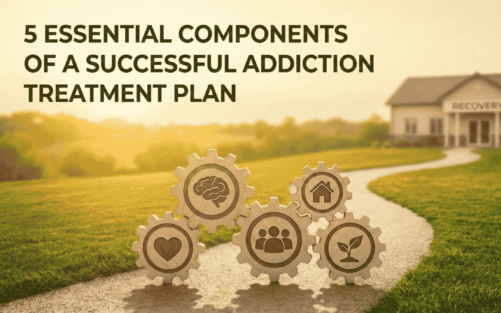
A successful addiction treatment plan is no accident, but instead is the result of a thorough assessment, individualized and addresses the unique needs of the person. Whether a person is seeking help for substance use for the first time, or they are returning after a relapse — having a plan helps them get clean and stay clean. Think of it as laying a solid foundation before building a house: when you don’t have the right pieces in place, everything else is unstable.
Below are the five most essential components of an effective addiction treatment plan.
Component 1 – Comprehensive Assessment
Before any treatment begins, a thorough assessment lays the groundwork. It helps professionals understand the severity of the addiction and the best approach for recovery.
Physical Evaluation
A doctor assesses the individual’s overall health, identifies medical issues, and determines whether they need immediate medical attention.
Psychological Evaluation
Mental disorders, such as anxiety, depression, or trauma, often coexist with substance use disorder. Knowing this helps the therapy to be more directed.
Substance-Use History
For how long has the person been using? What substances? How often? This information informs detox and treatment approaches.
Why Proper Assessment Matters
Treatment is a shot in the dark without adequate evaluation. A good evaluation guarantees that each the of the steps in recovery is based on what the patient really needs–not what is assumed.
Component 2 – Medical Detoxification
Detox is usually the first formal stage of treatment. It detoxifies the body of addictive substances in a safe manner and makes the individual ready for more in depth work in recovery.
What Detox Really Means
Detox is not treatment, but rather the body stabilization procedure that involves elimination of substances while being monitored by a medical professional.
Managing Withdrawal Safely
Some withdrawal symptoms can be dangerous. Medical support ensures safety, comfort, and proper medication if needed.
The Role of Medical Supervision
Doctors and nurses monitor vital signs, manage symptoms, and prevent complications.
Preparing for Long-Term Care
A good detox program transitions smoothly into therapy, preventing relapse right after detox.
Component 3 – Behavioral Therapies
Therapy helps individuals understand why they use substances, break harmful patterns, and build healthy coping skills.
Cognitive Behavioral Therapy (CBT)
CBT teaches individuals to identify and replace negative thoughts that lead to addictive behaviors.
Dialectical Behavioral Therapy (DBT)
DBT is especially effective for those dealing with emotional instability or trauma.
Motivational Interviewing (MI)
MI boosts motivation by helping individuals overcome resistance and commit to recovery.
How Therapy Reshapes Thoughts and Habits
Therapy rewires the brain, helping individuals handle stress, triggers, and cravings in a healthier way.
Component 4 – Medication-Assisted Treatment (MAT)
MAT combines medications with therapy to reduce cravings and withdrawal symptoms.
Medications Used in Addiction Recovery
Common medications include:
- Methadone
- Buprenorphine
- Naltrexone
- Acamprosate
These help stabilize brain chemistry and reduce relapse risk.
How MAT Supports Long-Term Sobriety
Medications make recovery more manageable by removing physical barriers like cravings and withdrawal.
Combining Medication with Counseling
Research shows MAT is most effective when paired with behavioral therapy—not used alone.
Component 5 – Aftercare & Relapse Prevention
Recovery doesn’t end after rehab. Aftercare ensures ongoing support and helps maintain long-term sobriety.
Creating a Long-Term Recovery Plan
This includes continued therapy, regular check-ins, and personal goals.
Support Groups and Community Involvement
Groups like AA, NA, or SMART Recovery offer accountability and connection.
Healthy Lifestyle Routines
Exercise, sleep, mindfulness, and balanced nutrition all support emotional stability.
Why Relapse Prevention Is Crucial
Relapse is common, but preventable. A strong aftercare plan dramatically lowers risk.
Conclusion
A recovery plan for addiction is much more than just detox or therapy – it’s a regimented, comprehensive plan addressing physical, emotional and mental needs. When all the pieces are in place, people have a better chance to attain long-term recovery and to reestablish their lives with confidence and purpose.
FAQs
1. What is the first step in an addiction treatment plan?
A comprehensive assessment is always the first step to create a personalized treatment approach.
2. Is detox enough to treat addiction?
No. Detox only removes substances from the body; therapy and aftercare are essential for long-term recovery.
3. What role does therapy play in addiction treatment?
Therapy helps individuals understand triggers, build coping skills, and change harmful behavior patterns.
4. Do all patients need medication-assisted treatment?
Not always. MAT is used based on the type of addiction, medical history, and individual needs.
5. Why is aftercare so important?
Aftercare prevents relapse by providing continuous support, structure, and accountability.