








Understanding the Golden Retriever Temperament
Golden Retrievers are famous for being friendly, gentle, and highly intelligent dogs. These natural qualities make the training of golden retriever easier than many other breeds. They love spending time with people and enjoy learning new things. Most golden retrievers have a strong desire to please their owners, which becomes a powerful advantage during training. They are social animals and feel happiest when included in family activities. Because they are sensitive dogs, they respond much better to kind words and positive methods than to harsh corrections. Understanding this temperament is the first step toward successful training.
Why Early Training Matters
Starting training early is very important for every golden retriever owner. The training of golden retriever should begin as soon as the puppy arrives home. Young puppies learn fast and develop habits quickly. Good habits learned early usually last for life. Early training also helps prevent behavior problems before they start. Teaching simple rules such as where to sleep, how to behave indoors, and basic commands creates a strong foundation. Training from a young age builds trust between you and your dog and helps your puppy grow into a confident adult.
Essential Tools for Training
Before beginning any training, it helps to have the right tools ready. A comfortable collar and a strong leash are basic necessities. Training treats are very useful because they motivate your dog to learn. Small soft treats work best since they can be eaten quickly. Toys are also important tools for the training of golden retriever. Many goldens love balls and chew toys, and these can be used as rewards. A crate is another helpful item that can assist with house training and good behavior. With these simple tools and a positive attitude, training becomes much easier.
Starting With Basic Obedience
Basic obedience is the heart of all dog training. Every golden retriever should learn simple commands such as sit, stay, come, and walk politely on a leash. These commands create structure and make daily life with your dog enjoyable. Training sessions should be short and fun so your dog stays interested. Repetition and patience are the keys to success.
Teaching Sit and Stay
Teaching a golden retriever to sit is usually very easy. Hold a treat close to your dog’s nose and slowly move it upward. As your dog follows the treat, the bottom naturally goes down. The moment your dog sits, say the word sit and give the reward. Stay is taught after sit is mastered. Ask your dog to sit, show your open palm, and say stay. Take a small step back and reward if your dog remains in place. Slowly increase time and distance as your dog improves.
Recall Training
Recall means teaching your dog to come when called. This is one of the most important parts of the training of golden retriever. Always use a happy voice when calling your dog. Reward every successful response with treats and praise. Never call your dog for something unpleasant, because you want coming to you to always feel positive and safe.
Leash Manners
Golden retrievers are strong dogs, so learning good leash manners is essential. Start practicing in a quiet place with few distractions. If your dog pulls on the leash, simply stop walking. Move forward only when the leash becomes loose again. With regular practice, your dog will learn to walk calmly by your side.
House Training Your Golden Retriever
House training is often the first major goal for new owners. The training of golden retriever in this area requires patience and consistency. Take your puppy outside frequently, especially after eating, sleeping, or playing. Always praise and reward your puppy for going potty in the correct place. Accidents will happen, but punishment should be avoided. A regular routine and the use of a crate can make house training much faster and easier.
Socialization Skills
Proper socialization is a very important part of raising a golden retriever. Socialization means introducing your dog to new people, places, sounds, and experiences in a positive way. Well-socialized dogs grow up to be calm and confident adults. Take your puppy on short trips, allow friendly visitors to meet your dog, and encourage safe interactions with other dogs. Good socialization prevents fear and anxiety later in life.
Positive Reinforcement Methods
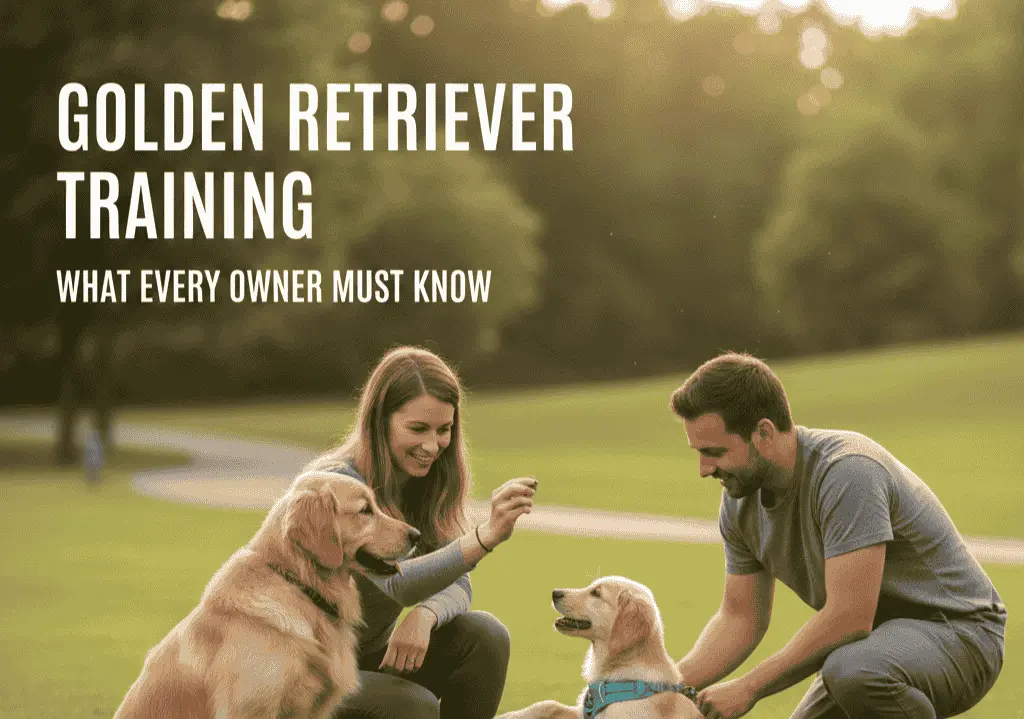
Modern dog training focuses on positive reinforcement. This means rewarding good behavior instead of punishing mistakes. During the training of golden retriever, treats, praise, and affection should be used as motivation. Dogs naturally repeat behaviors that bring them rewards. Harsh corrections or yelling can damage trust and make training harder. Keeping lessons fun and encouraging creates the best results.
Common Training Mistakes to Avoid
Many owners make simple mistakes without realizing it. One common error is being inconsistent with rules. Another mistake is expecting too much too soon from a young puppy. Repeating commands over and over without guiding the dog can also cause confusion. Using anger or punishment harms the learning process. Skipping daily practice is another reason training sometimes fails. Avoiding these mistakes will make the training of golden retriever much more successful.
Advanced Training Techniques
After basic obedience is learned, you can move on to advanced training. Golden retrievers enjoy challenges such as agility, retrieving games, and learning new tricks. These activities keep your dog mentally and physically active. Advanced training strengthens the bond between you and your dog and gives your golden retriever a fun job to do.
Mental Stimulation and Games
Golden retrievers are intelligent dogs that need mental exercise. Puzzle toys, scent games, and hide and seek are excellent ways to keep them busy. Teaching new tricks also provides mental stimulation. A dog that uses its brain every day is usually calmer and better behaved at home.
Health and Nutrition for Better Training
Good health plays a big role in successful training. Feed your golden retriever high-quality food and make sure fresh water is always available. Regular vet visits keep your dog in top condition. Daily exercise is also very important. A well-exercised dog can focus better and learns faster during training sessions.
Creating a Daily Routine
Dogs feel secure when they have a regular routine. Set specific times for meals, walks, playtime, and training. Consistency helps your golden retriever understand what is expected each day. Short training sessions included in the daily routine will bring steady progress over time.
Real Life Case Study
A dog owner named Sara adopted an eight-week-old golden retriever puppy called Rocky. At first, Rocky was very energetic and difficult to manage. Sara decided to follow a simple plan for the training of golden retriever. She practiced basic commands every day using treats and praise. She also focused on house training and socialization. Within a few months, Rocky became a well-behaved and confident dog. This real example shows that patience and consistency truly work.
Frequently Asked Questions
When should I begin training my golden retriever?
Training can begin as soon as the puppy comes home, usually at eight weeks of age.
How long should each training session last?
Five to fifteen minutes per session is ideal for most dogs.
Are golden retrievers easy to train?
Yes, they are very intelligent and eager to please, which makes them highly trainable.
What rewards work best?
Small treats, verbal praise, and playtime are excellent rewards.
How can I stop jumping behavior?
Ignore jumping and reward your dog only when all four paws are on the ground.
Can older golden retrievers still learn?
Yes, dogs of any age can be trained with the right approach.
For more helpful training information, visit the American Kennel Club at https://www.akc.org
Conclusion
The training of golden retriever is a rewarding experience that creates a strong bond between dog and owner. With patience, kindness, and consistent practice, every golden retriever can become a well-mannered companion. Start early, stay positive, and enjoy the journey of helping your dog learn and grow.