
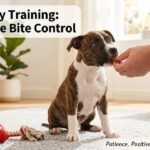



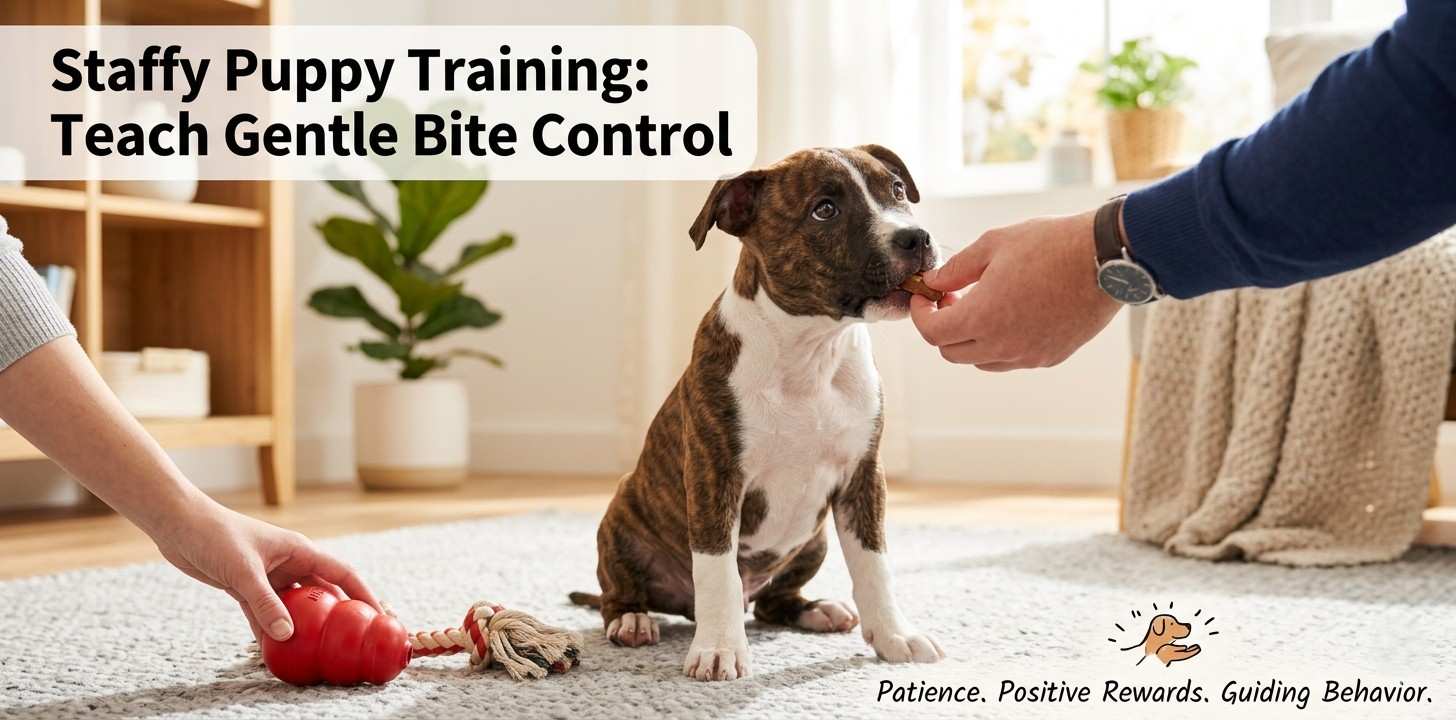
To teach a Staffy puppy not to bite, guide their chewing toward appropriate toys, end play immediately if biting occurs, and consistently reward gentle interactions. With steady patience and repetition, most puppies develop good bite control within a few weeks. Adding calm socialization and keeping training sessions short but regular will reinforce these lessons, helping your puppy learn boundaries more quickly and grow into a gentle, well‑mannered companion.
Why Do Staffy Puppies Bite So Much?
Staffordshire Bull Terrier puppies are lively, playful, and equipped with powerful jaws, which can make their biting feel more intense. But don’t worry, this is completely normal.
Typical causes include:
- Teething discomfort (especially between 8–16 weeks)
- Playful interaction
- Curiosity and exploring with their mouth
- Limited bite inhibition
The aim isn’t to eliminate biting instantly, but to guide them toward controlled, gentle behavior.
Step-by-Step Training to Stop Biting
Redirect to Chew Toys
When your puppy bites hands or clothes, immediately offer a chew toy and praise them for using it.
Use the Ouch Method
Say ‘Ouch!’ firmly but calmly when bitten, then stop interacting to mimic how littermates teach bite control.
End Playtime Immediately
If biting continues, stand up, walk away, and ignore your puppy for 20–30 seconds so they learn biting ends the fun.
Reward Gentle Behavior
Give treats and praise for calm play, gentle interactions, and licking instead of biting. Dogs tend to repeat the behaviors that earn rewards.
Avoid Overstimulation
Watch for signs like zoomies or snapping, and give breaks, naps, or quiet time to prevent overexcited biting.
Common Mistakes to Avoid
Avoid these mistakes, or training will take much longer:
- Hitting or yelling only creates fear and aggression.
- Treating your hands as toys
- Reacting inconsistently
- Ignoring “small bites”
The key is consistency every single time.
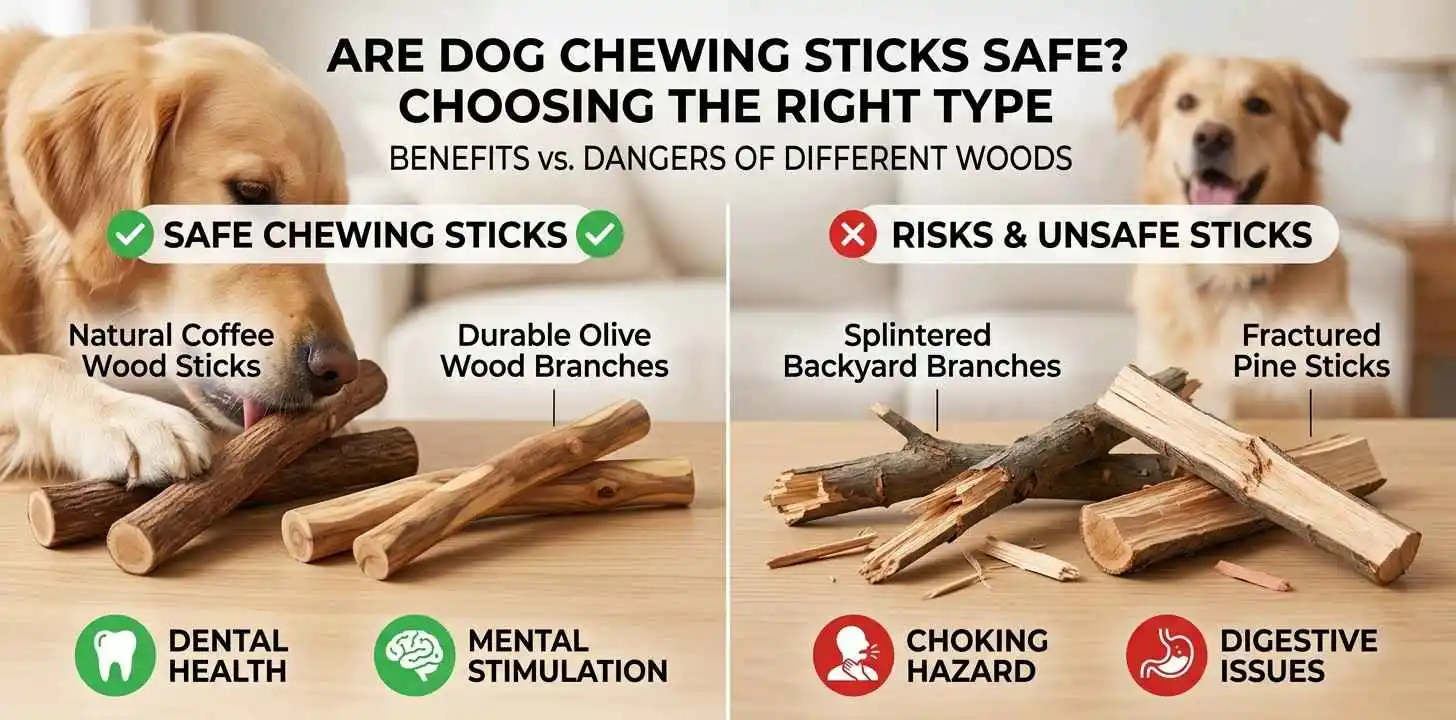
Best Chew Options for Staffy Puppies
Because Staffies love to chew, it’s best to pick:
- Tough rubber toys (like KONGs)
- Puppy‑safe nylon chew bones
- Frozen carrots (perfect for teething)
Skip very hard bones, since they can damage teeth.
How Long Does It Take to Stop Biting?
Most Staffordshire Bull Terrier puppies usually show progress fairly quickly if training is consistent. Here’s a simple timeline to keep in mind:
Early Improvement
With consistent training, most Staffy puppies start showing better bite control within 2–4 weeks.
Develop Strong Bite Inhibition
By around 5–6 months of age, many puppies achieve full bite control.
Stay Consistent Daily
Daily practice and patience are the key factors that make training effective and lasting.
This timeline is only a general guide, and every puppy progresses at their own pace. The most important factor is consistency: rewarding gentle play, redirecting biting, and calmly ending play when needed. Over time, these habits build reliable bite inhibition.
Final Thoughts
Training a Staffy puppy not to bite takes patience, consistency, and the right approach. Focus on redirecting their chewing to toys, using positive reinforcement, and keeping discipline calm and steady.
Begin early, stay consistent, and your puppy will grow into a gentle, well‑mannered companion. Over time, pairing redirection with structured play and socialization helps them learn boundaries in a safe way. Avoid encouraging rough play that can reinforce biting, and instead reward calm, gentle interactions. With steady guidance, clear rules, and lots of affection, your Staffy will not only outgrow the biting phase but also develop into a loyal, trustworthy dog who thrives on respect and positive connection.
FAQs
Is it normal for Staffy puppies to bite a lot?
Yes, this breed is naturally playful and energetic, so frequent biting during puppyhood is expected.
Should I punish my puppy for biting?
No. Instead of punishment, use redirection and positive reinforcement to guide better behavior.
Can biting turn into aggression later?
Not usually. With proper early training, biting develops into controlled, gentle play rather than aggression.