









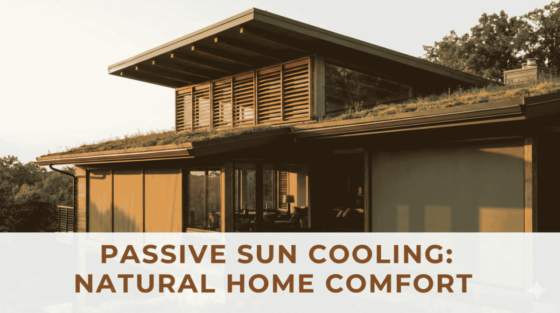
Introduction: The Importance of Passive Cooling
As temperatures increase globally and energy prices continue to soar, home owners want to know how to keep their living spaces cool without using as much air conditioning. Not only are conventional cooling systems power-hungry, but they also result in long-term electricity, refrigerant and equipment dependency, and regular maintenance. That’s the question passive solar cooling systems address.
Passive cooling is the combination of architectural design, natural materials, air circulation, and landscaping to minimize heat gain without the use of mechanical systems. It’s not a new concept—passive cooling techniques were developed and refined by ancient civilizations long before the advent of AC—but thanks to advances in building science, these strategies are more effective than ever.
What’s the greatest benefit?
A well-designed passive cooling system can lower indoor temperatures by 5–15°C (10–30°F), reduce cooling costs by up to 60%, and provide a healthier, more comfortable, and quieter home throughout the year. This manual describes the science, design principles, materials and retrofit approaches that enable passive cooling to significantly reduce cooling loads.
The Science Behind Passive Thermal Control
Passive cooling is easier to understand if you begin with how heat comes into your home and how it moves around once inside.Passive cooling is based on three principles of science:
1. Heat Transfer Dynamics
Heat is transferred in three modes:
- Conduction: Heat travels through solid objects (walls, windows, roofs).
- Convection: Warm air rises and cool air sinks to produce air flow.
- Radiation: Sunlight and infrared heat radiate into the house.
Passive cooling works by preventing heat gain and promoting heat loss through these natural processes.”
2. Thermal Mass
Stone, clay and concrete can be heated by the sun during the day and then these heats are slowly released during the night.
Thermal mass in a passive cooling system acts as a buffer:
- Daytime: Absorbs heat excess to help keep indoor temperatures stable
- Evening: Releases heat while the outside temperatures cool down
Consider thermal mass to be like a “thermal battery” that evens out temperature fluctuations.
3. Natural Ventilation & Pressure Differences
Air flows from high-pressure areas to low-pressure ones.
Passive cooling uses this principle to exhaust warm air from a house and draw in cooler outdoor air via:
- Cross ventilation
- Stack ventilation
- Night-time cooling
- Venturi effects generated by architectural configurations
These systems may be added together to produce air flow that never stops even in the absence of mechanical fans.
Design Principles: Orientation, Shading, Airflow
Whether you are constructing a new house or renovating an old one, these design basics are the foundation of any passive cooling approach.
1. Proper Building Orientation
The solar heat your home takes in is a function of orientation.
- In warm climates dwellings perform better facing north–south with the smallest wall area perpendicular to the sun path in order to minimize heat gain from the east and west.
- In cold and mixed-humid climates, a carefully controlled southern exposure is used to provide solar heat in the winter and is shaded in the summer.
Properly orienting a home can save 20–30% in energy used for cooling.
2. Shading Strategies
Shade is the most effective form of passive cooling, and the easiest to add to an existing home.
Classes of Passive Shading:
- Overhangs and awnings: Block the high summer sun but let in the low winter sun.
- Pergolas with vines: Deliver two seasons of breathable shade.
- Exterior shutters and louvers: Block the heat before it gets to your windows.
- Nature and Trees: One shade tree can cool a façade by 11°C (20°F).
Outdoor shading is much more effective than interior blinds as it prevents heat from entering the house in the first place.
3. Optimized Airflow Design
Adequate ventilation is necessary to carry away heat and to produce comfort.
Cross Ventilation
Windows or vents on opposite sides of a room enable wind to flow through the house.
Stack Ventilation
Warm air rises, so do:
- High vents, skylights or clerestory windows let out the hot air.
- Low windows draw in cooler air.
This is a natural “thermal chimney.”
Breezeway Architecture Open air corridors are said to enhance wind flow from room to room — and they really do, especially in tropical climates. Open-air corridors open up wind flow between rooms, making this an ideal set-up for warm climates.
Wind Scoops
Traditional Middle Eastern wind towers funnels air down into living spaces. Contemporary designs are small and energy-efficient and in some cases they incorporate solar energy.
Best Passive Cooling Materials
The right materials can dramatically reduce heat gain and increase energy efficiency.
1. High-Reflectance Roofing (Cool Roofs)
Cool roofs are designed to reflect more sunlight and absorb less heat.
Options include:
- Reflective white coatings
- Metal roofs with reflective pigments
- Ceramic-coated shingles
These can result in a 30–40°C (50–70°F) reduction in temperature of roof surfaces.
2. Thermal Mass Materials
These stabilize indoor temperatures by absorbing and releasing heat:
- Concrete
- Rammed earth
- Adobe
- Brick
- Stone tiles
- Cob
Homes built with high thermal mass stay cooler for longer periods.
3. Heat-Blocking Window Technologies
Windows are responsible for up to 40% of unwanted heat gain.
Consider using:
- Low-E (low emissivity) coatings
- Double or triple glazing
- Solar control window films
- UV-blocking roller shades
- Exterior solar screens
South and west windows benefit the most from upgraded glazing.
4. Breathable Natural Insulation
Unlike standard insulation that can trap moisture, natural materials manage heat and humidity better:
- Cork
- Hemp insulation
- Cellulose
- Sheep’s wool
- Wood fiber boards
These materials regulate temperature while reducing indoor humidity—a critical factor for comfort.
5. Passive Cooling Paints & Coatings
Infrared-reflective paints can keep surfaces cool even under direct sun.
Innovations include:
- Radiative cooling paints
- Reflective ceramic microsphere coatings
Some formulas can reduce wall temperatures by 10°C (18°F).
How to Retrofit Existing Homes With Passive Cooling
You don’t need to build a new house to benefit from passive cooling. Many strategies apply beautifully to existing homes.
1. Add Shade to Windows and Walls
Small changes make a big difference:
- Install exterior solar screens
- Add awnings or overhangs
- Plant shade trees or apply vertical gardens
- Use pergolas with climbing plants
Awnings can reduce solar heat gain by up to 65% on south-facing windows and 77% on west-facing windows.
2. Improve Insulation and Thermal Mass
Interior upgrades include:
- Adding thermal mass flooring (stone, tile)
- Retrofitting with natural insulation
- Using thick curtains or thermal blinds
Exterior insulation (such as EIFS) also significantly reduces heat transfer.
3. Enhance Ventilation
Try these retrofits:
- Install operable skylights or roof vents
- Add stack vents in upper-level hallways
- Use transom windows to move air between rooms
- Create a night-time cooling routine with opened windows
Even simple actions like opening windows at night and closing them during the day can reduce indoor heat by 3–5°C.
4. Apply Reflective Coatings
Reflective roof coatings are relatively inexpensive and highly effective:
- Elastomeric cool roof coatings
- Solar reflective roof membranes
- Radiative cooling paints
These can yield an ROI within 2–4 years due to energy savings.
5. Modify Landscaping for Cooling
Nature is one of the best passive cooling systems:
- Shade trees reduce heat around walls and windows
- Grass and ground cover lower surrounding surface temperatures
- Water features create evaporative cooling zones
- Orient patios and outdoor living spaces to encourage breezes
Strategic landscaping can decrease wall temperatures by up to 10°C (18°F).
Cost vs. Benefit Analysis
Investing in passive cooling pays off both immediately and over time. Here’s how the economics break down:
Short-Term Benefits
- Lower energy bills (10–30% reduction immediately)
- Better indoor comfort without mechanical noise
- Improved air quality
- Reduced strain on existing HVAC systems
Long-Term Benefits
- Lower lifetime cooling costs
- Increased home resale value
- Reduced carbon footprint
- Longer roof and window lifespan
- Higher energy independence
Typical Cost Ranges
| Passive Cooling Upgrade | Cost Range | Energy Savings |
| Window shading | $200–$2,000 | 10–25% |
| Reflective roof coating | $1,000–$3,000 | 15–30% |
| Window films | $100–$600 | 5–15% |
| Cool roof installation | $6,000–$12,000 | 15–40% |
| Thermal mass additions | $1,000–$5,000 | 10–20% |
| Landscaping | $200–$5,000 | 5–20% |
Most passive cooling improvements pay for themselves in 2–7 years, depending on climate and installation costs.
Final Insights
Passive solar cooling is more than just a trend in building design—it’s a savvy, future-ready mix of engineering, sustainability, and comfort. Through strategic design, intelligent use of materials and the natural flow of air, homeowners can greatly minimize indoor heat and lessen the need for air-conditioning.
Whether you’re building a new home or upgrading an existing one, passive cooling systems offer:
- Lower energy bills
- Greater comfort
- Improved indoor air quality
- Long-term durability
- Eco-friendly performance
Begin with the most-basic improvements—window shading, ventilation enhancements, and reflective coatings—and work your way up. With every layer in place, you decrease heat gain and make your home naturally cooler, healthier and more sustainable.