









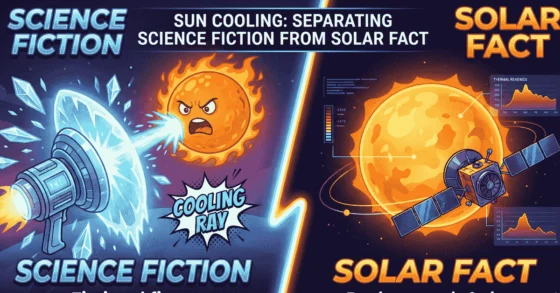
Have you ever heard someone say, “the sun is cooling” and wondered what they meant? Maybe you were a bit puzzled. At any rate summer seems as hot as ever! In fact, the term ‘sun cooling’ comprises two very distinct concepts. It’s a huge space science question. The other is a practical problem that we all have to deal with: how to cool down after being baked by the sun.
Let’s clear up the confusion. In this post I will go over the actual science in what makes the sun so energetic and then I will discuss a few, simple things you can do to avoid the heat here on Earth.
Part 1: The Big Question – Is the Sun Actually Cooling Down?
There is the sci-fi aspect. The short answer is no, the sun isn’t getting cooler in a way that has an impact on our weather or climate or the way that we live. Let’s break down why.
Our Sun’s Stable Fire
Our sun is a middle-aged star. We’ve been going for about 4.6 billion years and have a lot more fuel. It’s currently in a very stable, long phase of its life. The sun is in fact predicted to very gradually brighten and get hotter, not cooler, by scientists. We’re looking at alterations over hundreds of millions of years. So don’t lose any sleep over the sun’s furnace going dark anytime soon.
Where the “Cooling” Myth Comes From: Solar Cycles
This is the origin of confusion. The sun also has an 11-year cycle of activity.
- Solar Maximum: This is the solar maximum (peak in activity). The sun has more sunspots (dark, cooler regions) and emits more energy toward the Earth.
- Solar Minimum: This is the quiet part of the solar cycle. Sunspots diminish, and there’s a slight reduction in energy output.
This ”low point” in a solar cycle during solar minimum is sometimes mis-termed “sun dimming.” But it’s just a normal, temporary cycle. Think of it like your oven cycling on and off to maintain a steady heat. The sun is doing the same thing on a very large scale.”
The Sun’s Very, Very Distant Future
Will the sun cool down? Yes, but not anytime soon. In approximately 5 billion years, it will exhaust its fuel supply in the core and expand into a red giant. Eventually, it will collapse into a minuscule, dim “white dwarf” that gradually cools down over trillions of years. So, in the words of astronomers, “sun cooling” is something to look forward to, not something to worry about.
Part 2: So… What’s the Deal? – Cooling Down THE Sun
This is the everyday, practical definition of “sun cooling.” It’s about shading ourselves and our homes from solar heat. Here are some tried and true tips.
Smart “Sun Cooling” for Your Home
“Sun cooling” is a direct use of solar energy to cool a home without going through that intermediary of the electrical grid and air conditioning.
You don’t have to run the AC all day long and night long. Use these tricks first.
Keep the Heat Out Before It Gets Indoors
- The simplest way to cool down is to keep heat out. Apply Reflective Finishes: Light-toned “cool roofs” or good quality reflectivity paints reflect sunlight rather than retain it.
- Apply Window Films: Good quality window tin (such as ceramic film) is like sunscreen for your windows. It allows light to pass through but blocks a significant amount of heat.
- Apply Strategic Shading: Exterior shading is most effective. Go with awnings, pergolas or even well-placed trees. It truly makes a huge difference to keep the sun off your windows and your walls.
Let it breathe: Heat was coming in and staying. You have to let It Out.
- Vent Your Attic: Your entire house bakes in a hot attic. Be sure you have adequate soffit vents (air coming in) and ridge vents (hot air going out). That creates a cooling flow that draws heat up and out.
- Seal and Insulate: Having your attic and walls well insulated is like having a thermos. It has the effect of trapping hot air inside the house and holding cool air outside.
Personal “Sun Cooling” for Your Comfort
Cool your body down with these simple tricks.
Dress for the Heat
Your clothing is your first line of protection.
- Opt for loose-fitting light-colored clothing made of natural fibers (such as cotton) or moisture-wicking material.
- Use a wide-brimmed hat to protect your face and neck.
Use Simple Cooling Tools
- Cool Towels: Moisten, wring, and flick. They remain cool for hours.
- Spray Bottles: A little mist of water on your skin is instant cooling, especially when evaporation starts.
- Stay hydrated: Drink more water than your mind tells you you need. When you have a good level of hydration your body is able to cool itself more efficiently.
Time Your Day
Plan by the sun. Outdoor activities are best in the morning or at night. Stay out of the heat of the day between 2 p.m. and 5 p.m.
Sun Cooling Myths: Busted!
Let’s debunk a few myths.
- Myth: “We’re going into a mini ice age due to a grand solar minimum.”
- Truth: Scientists agree a robust solar minimum would only slightly mitigate human-induced global warming. It would not reverse it or halt it.
- Myths myths oh myths! “Opening the windows at 12 p.m. will cool down my house.”
- Fact: You just let the heat in if it’s hotter outside than inside! Now is the time to ventilate your home – in the cool morning or at night.
- Myth: “All blackout curtains are good for cooling.”
- Fact: Curtains with a light-colored, reflective backing that faces the window will reflect heat effectively. A dark curtain absorbs the heat and can radiate it into your home!
Conclusion
So, is the sun cooling? Not in our lifetime, or billions of years from now. These are very energetic phases and the changes we see are just part of the sun’s normal cycles.
The real “sun cooling” that counts is what we do right here on Earth. When we learn how the heat from the sun works and apply intelligent techniques to block and handle it, we can stay comfortable, save energy and have fun in the sun without getting too hot.