








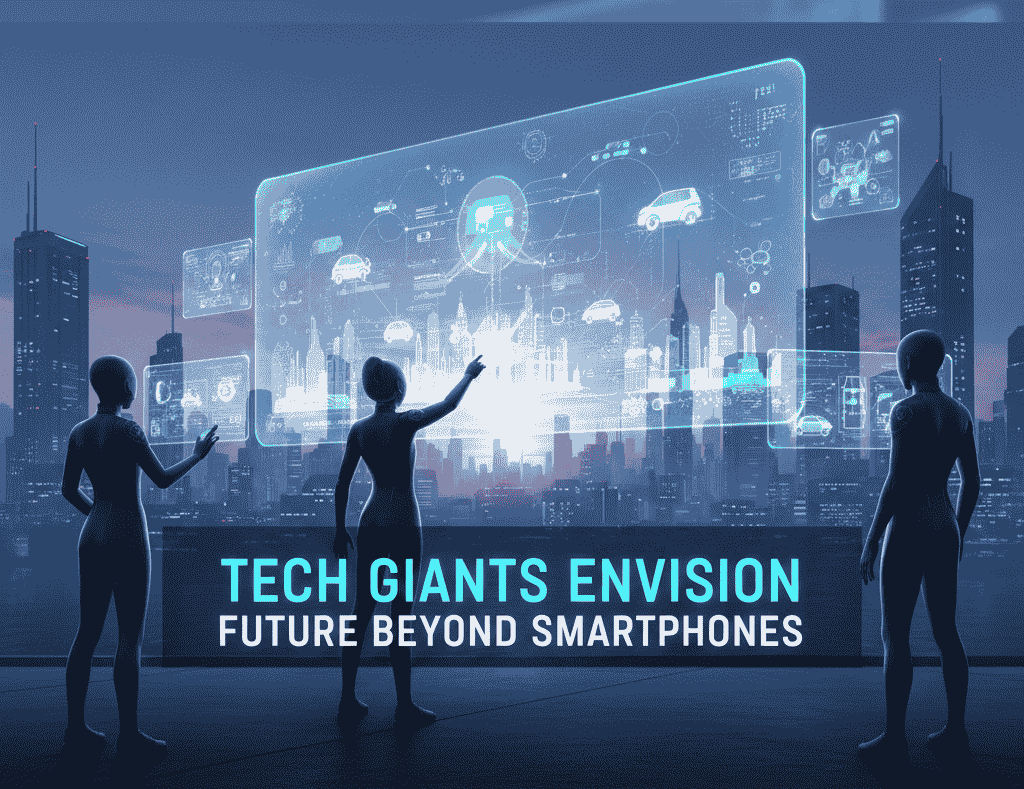
The world of tech is evolving rapidly. Smartphones have been the primary device we use every day for many years. We call them “smart” because they enable us to talk, learn, play, work, and take pictures. But now, the big tech companies are envisioning a future where smartphones are no longer the most important part of our digital lives.They want a world where technology feels natural, easy, and part of real life.
In this article, we explain that future in simple words everyone can understand. We also include ideas that big companies like Apple, Google, Meta, and Microsoft are exploring to shape what comes next. This is the future of digital interaction beyond smartphones.
Why Smartphones Are Changing
Smartphones have been a huge seller, but they are reaching their saturation point. People don’t always get excited about new phones that have small changes. That leads tech companies to think: What’s next after phones?
Smartphones won’t disappear, but they might not be the main device we use in the future. Instead of holding a phone all the time, we might interact with technology in new ways—ones that feel easier and more natural.
New Technology That Could Replace Phones
Big tech companies are working on exciting new tech. Here are the main ideas:
1. Augmented Reality (AR) and Mixed Reality (MR)
AR and MR superimpose virtual objects into the real world. Just imagine wearing glasses that display directions in your actual line of sight, like a magical map hovering over the air. You could read messages, get directions and consult digital helpers without ever glancing at a phone screen.
These “smart glasses” could become the new way to interact with digital content, much like phones do today.
2. Virtual Reality (VR)
VR puts you in a digital environment. It’s not just for games anymore. People are working in VR, learning in VR, and telling stories to each other in a virtual space. Down the line, VR will let us attend classes, meetings and concerts from home.
3. Wearables Beyond Smartwatches
Wearables are tiny gadgets that you strap on your body. Smartwatches remain the most popular, but new entries include smart rings, health trackers, and even smart glasses. They can provide updates and assist you without requiring a big screen.
Wearables could measure health, show messages, and help with commands simply by looking, talking, or using gestures.
4. Artificial Intelligence (AI) Everywhere
AI is a unique form of computing that enables machines to have a better understanding of us. Instead of instructions to type or tap, AI can listen, predict and assist us. For instance, an AI assistant might recommend a favorite song, remind you of chores, or assist with planning.
Tech giants want AI to be the brain of everything, making digital life smarter and smoother.
5. Voice, Gesture, and Natural Interaction
Speaking to devices is nothing new with the likes of Siri and Google Assistant. In the future, you also may control devices with your hands — and possibly even by thinking. Some firms are exploring brain-computer interfaces, where digital tools are controlled by your thoughts.
While this is still early, it shows how future tech could be very different from screens and buttons.
Ambient and Connected Computing
In a place and a time later than that of Smartphones, technology will be everywhere, rather than all crammed into one device. That’s the idea behind ambient computing. You can think of it as digital tools that are woven into your environment—your home, your car, your clothing, and perhaps even the air you breathe.
For example:
- Your house could know when you’re cold and warm up by itself.
- Your glasses could show maps while you walk.
The goal is to make tech invisible, yet always helpful.
Real-Life Case: Smart Glasses Today
Let’s look at a real case. Meta (the Facebook company) has already sold millions of smart glasses. These glasses act like normal glasses but can display digital information and are connected with AI assistants.
This is a step toward the future people imagine—where you don’t pull out a phone to check a message. Instead, you see it right in your view.
Big Challenges Ahead
Even though the future sounds fun, there are problems:
1. Privacy and Safety
When tech is always listening and watching, we need strong rules to protect people’s privacy.
2. Cost and Access
These new devices may be expensive at first, making them hard for everyone to use.
3. Learning Curve
Some people may find new tools difficult to use at first. Good design and simple controls will matter a lot
What the World Might Look Like in the Future
In the next decade, experts say:
- Smartphones will still be around, but not as the main hub.
- AR glasses and wearables could become more common than phones.
- AI will help in everything we do.
People might work, play, learn, and socialize in immersive digital worlds that feel natural and exciting.
Conclusion
Tech giants envision a future beyond smartphones where digital world and real life work together naturally. Instead of holding a device, we will live with technology that understands us, listens, and helps without interrupting our daily life.
This future may take time, but the journey has already started—right now.