
Introduction to Walking a Dog After Eating
Walking a dog after eating is something many owners don’t think twice about. You feed your dog, grab the leash, and head outside. It sounds simple, right? However, timing can make a big difference in your dog’s health and comfort.
Dogs love routine. They thrive on consistency. But when it comes to walking a dog after eating, rushing things can lead to discomfort, digestive problems, and in rare cases, serious medical emergencies.
So, how long should you wait? What risks should you know about? And how can you create a safe routine?
Let’s explore everything you need to know.
Why Timing Matters for Your Dog’s Health
Timing isn’t just a small detail. It plays a big role in digestion and overall wellness.
When your dog eats, blood flow increases around the stomach and intestines. The body focuses on breaking down food. If you suddenly start intense activity, blood shifts toward the muscles. That change can disrupt digestion.
How a Dog’s Digestive System Works
A dog’s stomach begins processing food almost immediately. Enzymes break down nutrients, and muscles move food along the digestive tract. This process takes time.
Small meals may digest faster. Larger meals take longer. Generally, most dogs need 30 to 60 minutes to begin proper digestion before light activity.
What Happens If You Walk Too Soon?
If you walk your dog immediately after eating, you might notice:
- Vomiting
- Bloating
- Discomfort
- Sluggish behavior
- Excessive drooling
In extreme cases, especially in large breeds, there’s a risk of a dangerous condition called Gastric Dilatation-Volvulus (GDV).
For trusted veterinary information, the American Veterinary Medical Association provides useful guidance:
https://www.avma.org/
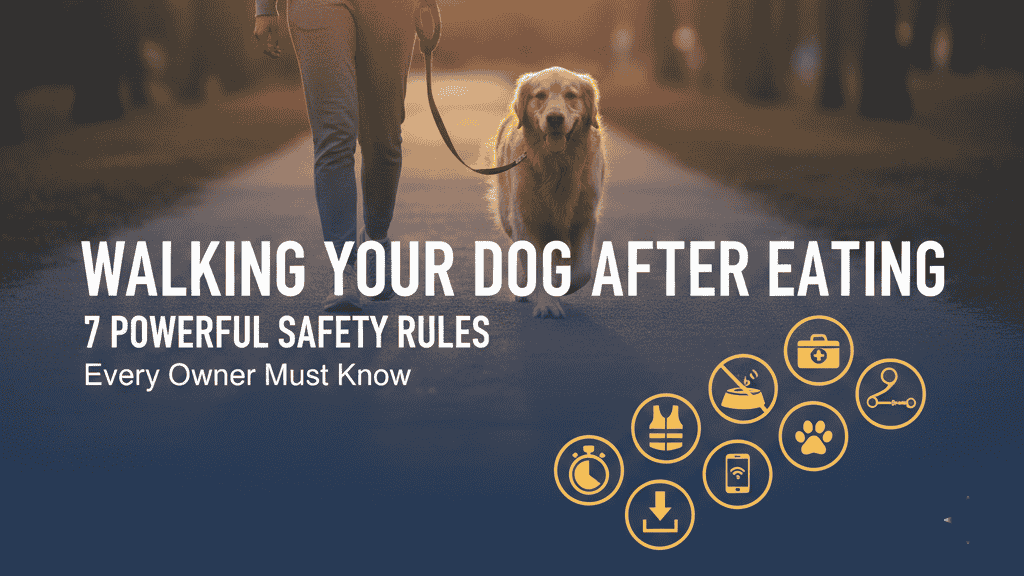
7 Powerful Safety Rules for Walking a Dog After Eating
Now let’s break down the essential safety rules every responsible dog owner should follow.
Rule 1: Wait at Least 30–60 Minutes
For most dogs, waiting 30 to 60 minutes before walking a dog after eating is ideal. Larger breeds may benefit from waiting closer to one hour.
Rule 2: Adjust for Breed Size
Small dogs like Chihuahuas digest faster. Large breeds like Great Danes need more caution.
Large, deep-chested breeds are more prone to bloat. If you own one, patience is key.
Rule 3: Avoid Vigorous Exercise
A slow stroll is different from a high-energy run. If you must walk your dog soon after eating, keep it short and gentle.
No fetch. No sprinting. No rough play.
Rule 4: Watch for Warning Signs
Be alert for:
- Restlessness
- Swollen abdomen
- Gagging without vomiting
- Heavy panting
If you notice these, contact your vet immediately.
Rule 5: Consider Age and Health
Puppies may handle activity better, but they still need time to digest. Senior dogs or dogs with medical conditions need extra care.
Dogs with sensitive stomachs especially benefit from structured routines.
Rule 6: Plan Feeding Around Walks
Instead of walking right after meals, reverse the order.
Walk first. Feed after.
This simple switch reduces risk and supports natural digestion.
Rule 7: Stay Consistent
Dogs feel secure with routines. Feeding and walking at the same times each day keeps their digestive system predictable and balanced.
Understanding the Risk of Bloat
What Is Gastric Dilatation-Volvulus (GDV)?
Gastric Dilatation-Volvulus is a life-threatening condition where the stomach fills with gas and twists.
It can happen quickly. Without emergency treatment, it can be fatal.
While walking a dog after eating doesn’t directly cause GDV every time, vigorous activity increases risk in susceptible breeds.
Breeds Most at Risk
Large and giant breeds such as:
- Great Danes
- German Shepherds
- Dobermans
- Standard Poodles
These dogs require careful timing between meals and exercise.
Expert Advice and Veterinary Perspective
Veterinarians consistently recommend structured feeding and exercise schedules.
Based on clinical observation and research, professionals advise:
- Divide large meals into smaller portions
- Avoid elevated feeders unless prescribed
- Prevent heavy exercise one hour before and after meals
Experience in animal care shows that prevention is far easier than emergency treatment.
Real-Life Case Study
Sarah owns a 3-year-old German Shepherd named Max.
She used to feed Max and immediately take him for a 45-minute brisk walk. One day, Max began pacing, drooling, and trying to vomit without success.
She rushed him to the emergency clinic. Thankfully, it wasn’t full GDV, but it was severe bloating.
The vet advised her to wait one hour after feeding before walking. She adjusted her schedule. Since then, Max hasn’t had issues.
This example highlights how small routine changes can prevent big problems.
Follow for more if you own a dog. Here’s the article about “Do Dogs Know What I Love You Means” read about it if you find this article interesting.
Common Myths About Walking After Meals
Myth 1: Dogs Can Exercise Anytime
Not true. Timing matters.
Myth 2: Only Large Dogs Are at Risk
While risk is higher in large breeds, any dog can experience discomfort.
Myth 3: A Quick Walk Is Always Safe
Even short bursts of intense activity can disrupt digestion.
Ideal Daily Routine for Feeding and Walking
Here’s a balanced schedule example:
| Time | Activity |
| 7:00 AM | Morning walk |
| 8:00 AM | Breakfast |
| 12:00 PM | Light potty break |
| 5:00 PM | Evening walk |
| 6:00 PM | Dinner |
This routine ensures safe digestion time.
Frequently Asked Questions
1. How long should I wait before walking my dog after eating?
Wait 30–60 minutes. Larger breeds may need a full hour.
2. Can I take my dog out for a bathroom break right after eating?
Yes, but keep it short and calm.
3. Is walking a dog after eating dangerous?
It can be risky if done too soon or too intensely.
4. Does walking help digestion?
Light movement after sufficient rest may help, but not immediately after meals.
5. What are signs of bloat?
Swollen stomach, drooling, restlessness, and unproductive vomiting.
6. Should I feed before or after a walk?
Walking before feeding is generally safer.
Conclusion
Walking a dog after eating isn’t automatically dangerous, but timing and intensity matter. Waiting at least 30–60 minutes, adjusting for breed size, and avoiding vigorous activity can protect your dog’s health.
Simple changes in routine make a big difference.
Final Thoughts
Being a responsible dog owner means understanding small details that affect big outcomes. By following these 7 powerful safety rules, you’re giving your dog the safest and happiest life possible.
When in doubt, consult your veterinarian and create a routine tailored to your dog’s unique needs.